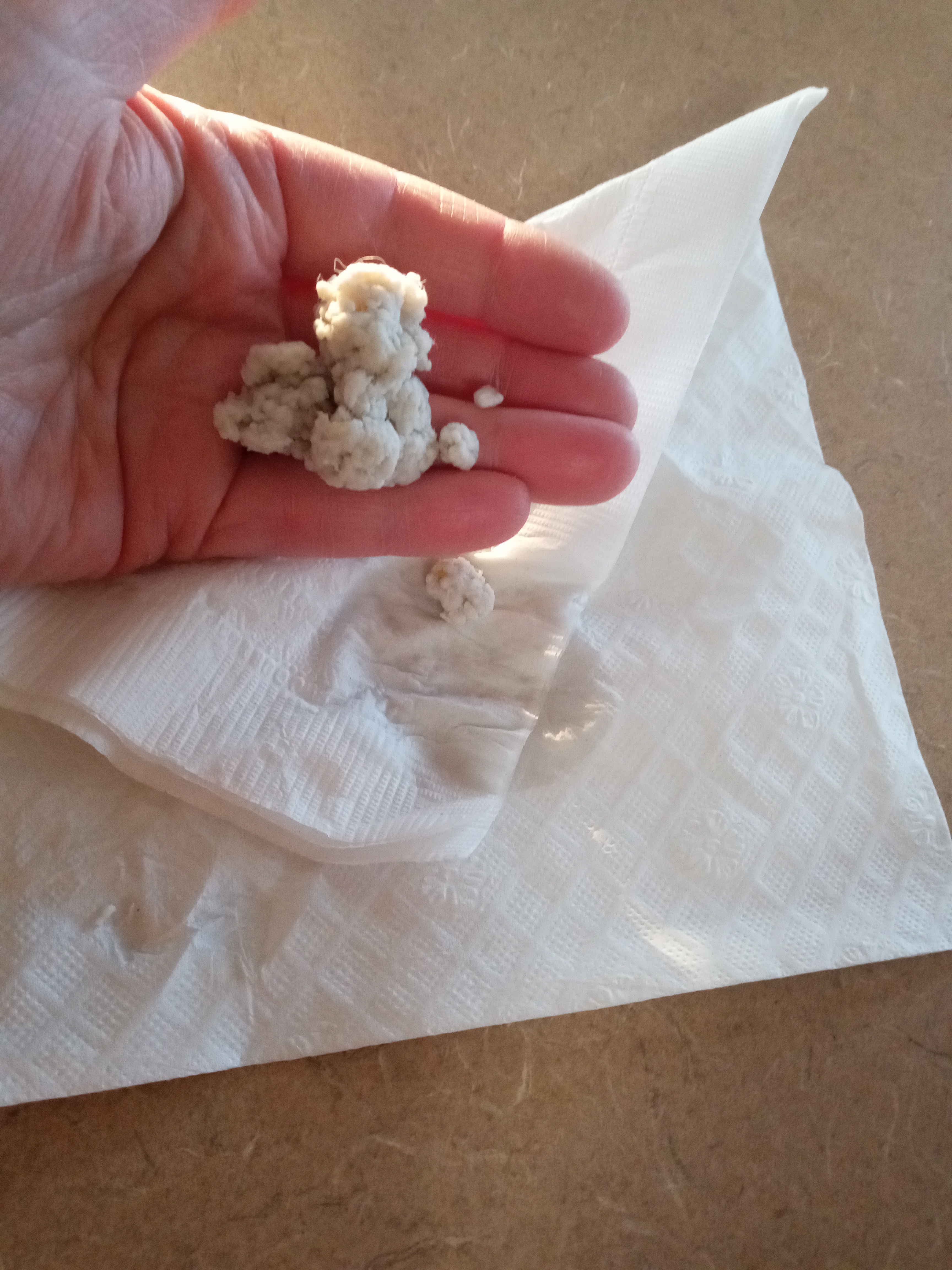
I arrive one early evening to find my mother sitting alone in her wheelchair at a table in the dining area of the Memory Care Unit. She is chewing on something that looks like chicken. She is happy to see me, as always, and seems a little more out of it than usual, perhaps tired near day’s end. Perhaps dementia. I notice the remains of a napkin on the table and realize she has torn off nearly the whole of it and that this is what is in her mouth.
Wasn’t it only months ago that my mother could still talk some sentences? Wasn’t it only a compilation of weeks ago that she was walking, that we sat on the patio outside with my dog sipping decaf and eating butter cookies in the light of an August afternoon, my mother laughing heartily at what seemed so funny to her? How quickly we moved from this into, “Can you watch her?” as she brushed her teeth and the Assistant asked, getting pulled away for an “assist” in another resident’s room, saying to me, “The last time I let her do it alone she started washing her face with it.”
The tooth paste.
I could not have predicted when the end turn would come, but I knew it was coming as I watched my mother’s balance waver, as I watched her ability to chew and swallow whole foods dissipate. And now, here she was, having entered an entirely new phase that left her unable to walk and had her moved to soft foods that were easier to swallow because she’d already had a “near fatal” choking event only one month after cookies on the patio; and in four more months she would fall – twice.
And now, here she was, a wad of napkin in her mouth.
-Mom, can you spit that out?
Sometimes one asks oneself if it can get worse. I remember saying to an ER doctor when asked that question while in the midst of an appendicitis crisis, “Is this worse—or this?” I said, quite sincerely, “There is no worse.” So it was going now with my mother. The worst had become a steady beat between glimpses of minor hope she would not slip away so quickly, though I knew she was slipping away all along.
-Mom.
-Mmhmm.
-Okay, but here, Mom. Can you spit that out?
I held out my hand.
-Mmhmm.
-It’s a napkin, Mom. If you spit it out I can throw it away.
-Mmhmm.
For another minute or two of my containing my panic so as not to cause my mother to inhale or get excited in any way, she kept the ball in her cheek, neither moving to swallow nor to spit it out. Then, as I kept my hand in place, open, some distance beneath her chin, sitting in the silence, waiting, my mother slowly tipped her head forward and began spitting out the napkin. Bits, at first, then the wad of it. Then more bits. Crisis held. Crisis averted. No one was present to witness if my mother had started choking. Evenings were always full of much more emptiness than days. Nursing staff thinned. Assistants were busy, post-dinner, readying other, most needy residents for bed or giving showers. This was in winter, 2022, and Covid was still impacting facilities in the fiercest of ways. Evening staff was regularly short and I worried about my mother incessantly, with pandemic related, added reason. Worry is a part of the dementia journey. Covid-19 only made this worse.
I often encourage caregivers to be aware such things are possible, not to frighten them, but to help them prepare in ways that might enable them to ward off such potentially traumatic occurrences by being aware they can very likely happen. The loved one’s body is being cut off by the brain’s inability to communicate with it. It is a difficult thing to know this will happen. In the best of circumstances we can’t always prevent the inevitable. We can’t, without 24/7 supervision, prevent a fall. We can’t prevent aspirant pneumonia. But we can safeguard to the best of our ability and use Our Helpers, whoever they might be, to help us. I immediately notified the Administrator of the napkin situation, providing a photo I’d taken as proof. I asked that my mother no longer be given napkins or have them within her reach. I achieved cooperation with this request. In that there is comfort.
Many in the support group are currently involved with a loved one who has entered end stage dementia. When it is all over, I offer this reminder, there will be grief, yes, but eventually, you will take great comfort in knowing you did everything you could do, and though it may have been less than perfect, as it almost always is, you did not let your loved one down.